
How AI Warm Transfers Work: From Voice AI Agents to Live Human Agents
High-volume enterprise contact centers face a structural dilemma: resolve customer inquiries quickly without sacrificing service quality. Traditional interactive voice response systems force callers through rigid menu trees, only to drop them into long hold queues. When an agent finally answers, callers routinely have to repeat their verification details, issue history, and reason for calling. This fragmented handoff inflates average handle times, frustrates callers, and increases operational costs.
The shift to modern agentic voice AI changes this dynamic. Autonomous voice agents now handle tier-one inquiries end to end, but complex edge cases, emotional disputes, or high-value sales requests still require human intervention. A clean transition relies on AI warm transfers. By capturing live conversation data, synthesizing intent, and delivering full context to a representative before the caller connects, AI warm transfers eliminate call repetition, lower handling costs, and elevate customer satisfaction.
What Is an AI Warm Transfer?
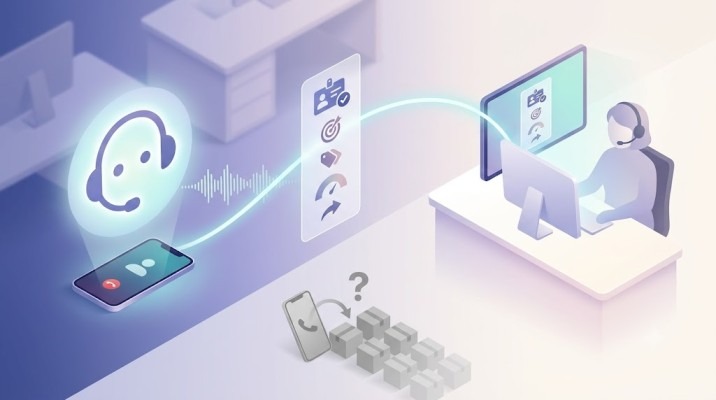
An AI warm transfer is a real-time call escalation process in which a voice AI agent hands off an active phone conversation to a live human representative and passes along a complete summary of the interaction.
Unlike a cold transfer, which blindly routes a call to an agent queue without context, an AI warm transfer ensures the human agent receives critical data before speaking with the customer. This pre-transfer briefing includes verified customer identity, intent analysis, key entities discussed, current sentiment score, and the exact reason for escalation.
How AI Warm Transfers Work: Step-by-Step Mechanics
Executing a seamless AI warm transfer requires sub-second coordination between speech recognition, natural language processing, enterprise telephony, and agent desktop software.
Step 1: Inbound Call Engagement
The interaction begins when an autonomous voice AI agent handles an incoming call. With low-latency processing, the AI agent greets the caller, verifies their identity, and begins resolving their query through natural dialogue.
Step 2: Escalation Trigger Detection
The voice AI agent continuously evaluates caller speech using an adaptive reasoning engine. When the system detects a complex request, a sensitive compliance issue, an emotional shift, or an explicit request for human assistance, it automatically initiates a smart call-escalation protocol.
Step 3: Real-Time Context Generation
While maintaining a natural dialogue with the caller, the system aggregates conversation metrics. It extracts key data points, including account numbers, specific error codes, expressed preferences, and real-time sentiment analysis, converting them into a structured briefing dossier for the human agent.
Step 4: Intelligent Call Routing
Using intelligent call routing rules, the platform identifies the most qualified available representative based on skill set, language proficiency, department, and account tier. The telephony engine places the caller on a brief, comfortable hold while establishing a private connection to the selected representative.
Step 5: Agent Screen Pop Briefing
Before the main audio channels bridge, the receiving human agent receives an instant desktop screen pop briefing. The agent reviews the caller’s issue summary, verified identity data, past interactions, and recommended next steps. In whisper-mode configurations, the system can also deliver a brief audio summary directly to the agent’s headset.
Step 6: Synchronized Live Audio Handoff
The platform connects the caller to the human representative. Because the representative has already reviewed the complete context, they open the conversation by addressing the specific issue immediately, eliminating the need for the customer to restate their problem.
Architectural Pillars of AI Call Handoff
Deploying a reliable AI call handoff infrastructure inside an enterprise contact center requires three core components working in unison:
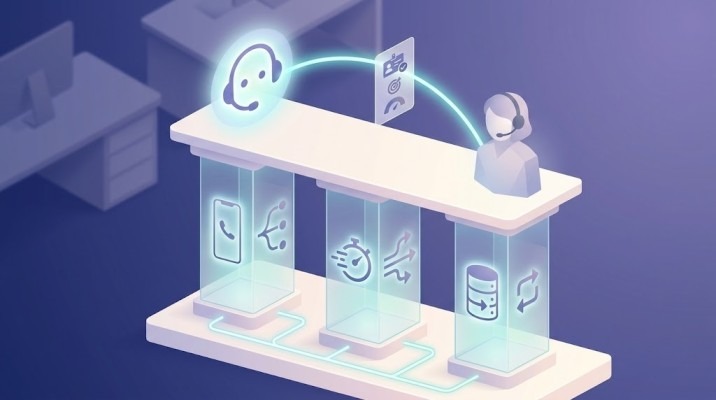
- Telephony and SIP Trunking Integration: Real-time Session Initiation Protocol (SIP) trunking lets the voice platform manipulate call legs dynamically, executing warm transfers, holds, and three-way bridges without dropping audio.
- Low-Latency Conversational Engine: To prevent awkward pauses during escalation, the underlying conversational AI architecture must process intent, compile data, and execute routing signals within milliseconds.
- Bi-Directional CRM and CTI Synchronization: Deep integration with Computer Telephony Integration (CTI) systems and enterprise CRMs ensures the context generated during an AI-to-human transfer is automatically logged to the customer’s permanent record.
Key Business Benefits of Intelligent Call Escalation
Implementing an enterprise-grade conversational AI warm transfer strategy delivers direct operational and financial returns across contact center environments.
1. Significant Reduction in Average Handle Time (AHT)
Human agents typically spend 60 to 90 seconds per call verifying identity details and asking callers to repeat their issues. Automated pre-validation and screen-pop briefings let agents move straight to resolution, directly supporting broader contact center automation goals.
2. Higher First-Contact Resolution Rates
By pairing automated data collection with specialized human expertise, agents can resolve complex inquiries on the first attempt. Human reps receive the exact context needed to solve edge cases without transferring the caller across multiple internal departments.
3. Reduced Agent Burnout and Turnover
Contact center representatives often suffer burnout from repetitive tier-one triage and managing frustrated callers. Delegating routine calls to voice AI agents lets human reps focus on rewarding, high-value problem-solving, which reduces burnout and turnover.
4. Improved CSAT and Net Promoter Scores
Callers value speed and efficiency. Removing repetitive questions and minimizing hold times creates a smooth customer experience that improves brand perception.
Industry Use Cases for AI to Human Transfer
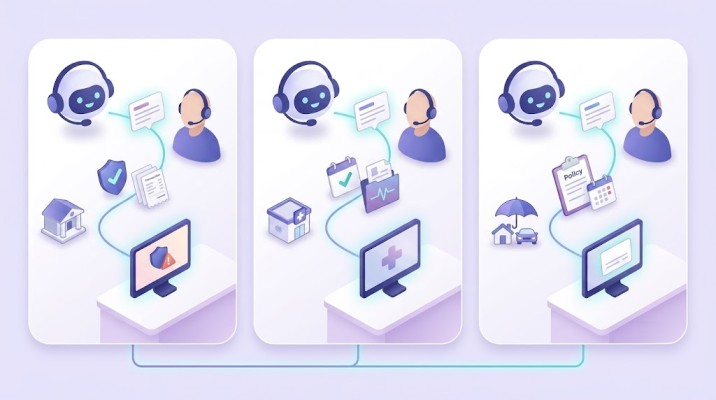
AI warm transfers adapt to each industry’s specific workflows. Here’s how they work in three high-volume sectors.
Financial Services and Banking
In consumer banking, an AI warm transfer protects sensitive workflows. A voice AI agent can authenticate a caller’s identity and handle routine balance inquiries. If the caller requests a complex loan modification or reports fraudulent activity, the system securely transfers the call to a human, delivering verified credentials and transaction logs directly to a fraud specialist. Banks in India are already adopting this approach as part of their wider move toward conversational AI.
Healthcare and Patient Triage
Patient access centers use intelligent call routing to manage high inbound volumes. Voice AI agents handle initial screening, appointment verification, and basic clinic information. When a patient describes severe symptoms or needs urgent care coordination, the platform escalates the call and routes it directly to a triage nurse, along with the patient’s record.
Insurance Claims Processing
During high-volume events, insurance platforms leverage an AI call handoff to maintain throughput. Voice AI agents collect initial loss details, policy numbers, and incident dates. For complex claims that require manual underwriting review, the system initiates a conversational AI warm transfer, giving the adjuster a complete claim summary before they greet the policyholder.
The Ello Advantage in Call Handoff Automation
Deploying enterprise-grade call handoffs requires a platform built specifically for real-time execution. An enterprise voice AI platform like Ello provides a seamless bridge between autonomous AI agents and human support teams.
Ello’s proprietary architecture provides key enterprise capabilities:
- Sub-500ms Latency Engine: Ello processes speech, summarizes context, and transfers signals rapidly, eliminating awkward dead air during escalations.
- Self-Evolving Learning Loop: The platform continuously analyzes interaction data and automatically optimizes its execution parameters after roughly 200 calls, driving a 30 percent boost in operational efficiency without manual developer intervention.
- Native Multilingual Handoffs: Ello supports 30+ languages and regional accents, letting the voice agent capture caller intent in local dialects and translate key summary details into standard enterprise formats for human agents.
- Voice-to-Action Enterprise Integration: Ello synchronizes directly with major CRMs, ERPs, and CTI frameworks, delivering instant screen pops and transcript logging during every AI warm transfer.
Frequently Asked Questions
1) What is the difference between a cold transfer and an AI warm transfer?
A cold transfer routes a call to an agent without background details, forcing the customer to repeat their issue. An AI warm transfer delivers a complete summary, intent analysis, and verified account data to the human agent’s screen before the call connects.
2) How does the system decide when to transfer from AI to human?
The voice AI platform monitors intent, caller sentiment, query complexity, and explicit requests for human assistance. When it reaches a threshold, the system triggers an automated transfer protocol.
3) Does an AI warm transfer increase caller wait times?
No. By automating identity verification and initial troubleshooting, the system shortens overall call durations. Advanced routing algorithms direct callers to available agents with pre-packaged context, reducing queue times.
4) Can AI warm transfers work across regional languages?
Yes. Modern platforms analyze caller speech in regional languages, synthesize the core issue, and present a translated summary on the receiving agent’s desktop dashboard.
5) How do human agents view the context during an AI call handoff?
Context is delivered via a CTI desktop screen pop or CRM integration. The agent sees a concise dashboard with customer identity, sentiment, a conversation summary, and recommended resolution steps before greeting the caller.
Conclusion
AI warm transfers give customers the speed of automation and the judgment of a human expert in the same call, without the frustration of repeating themselves.
Transform your contact center operations with seamless, context-aware call escalations. Discover how Ello helps enterprise teams eliminate handle time bottlenecks and elevate customer satisfaction by exploring Ello’s enterprise voice AI platform.