
Voice AI Compliance in India: A 2026 Guide to the DPDP Act and TRAI Rules
Indian enterprises deploying automated calling AI platforms face a rigorous regulatory environment. The Digital Personal Data Protection (DPDP) Act imposes penalties of up to ₹250 crore for significant compliance failures when consumer information is mishandled during automated interactions. Business leaders must balance the operational efficiency of cognitive voice systems with legal mandates on consent, cross-border data transfer rules, and telemarketing restrictions. Achieving voice AI compliance requires a foundational shift in how organizations architect their conversational infrastructure and handle user data.
The 2025–2027 DPDP Implementation Timeline
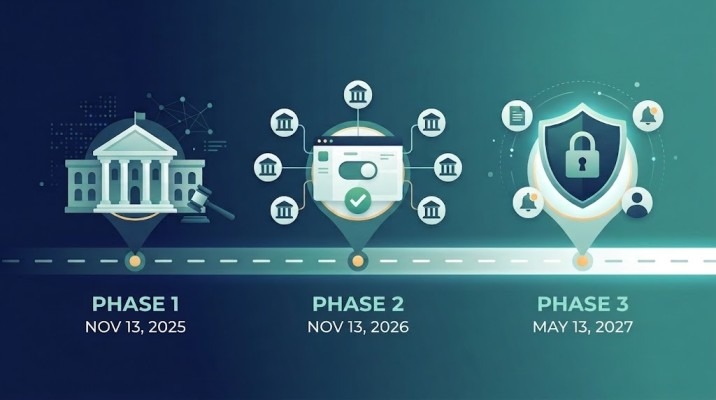
To understand the 2026 compliance landscape, enterprises must review the phased rollout of the DPDP Rules notified in November 2025. As the government’s official summary of the Rules sets out, they follow a three-phase timeline:
- Phase 1 (November 13, 2025): Provisions establishing the Data Protection Board of India came into force, and core definitions and procedural rules went live.
- Phase 2 (November 13, 2026): The Consent Manager framework commences. Registration opens for regulated entities that act as a single interface for data principals to grant, manage, and withdraw consent across multiple fiduciaries.
- Phase 3 (May 13, 2027): Deadline for full substantive compliance. All core operational duties, including notice, consent, security safeguards, breach reporting, and data principal rights, become fully enforceable.
Core Principles of the Digital Personal Data Protection Act
The DPDP Act reshapes enterprise accountability by designating organizations as data fiduciaries. Every automated outbound or inbound call that captures personally identifiable information must operate under valid consent. From May 2027, systems can no longer record conversations without valid consent, and enterprises should build for this now.
Voice AI data privacy best practices call for dynamic consent mechanisms before any substantive data extraction occurs during a live call. As consent managers begin registering from November 2026, enterprises should ensure their voice AI architectures can integrate with them to respect user preferences at scale.
Navigating Telemarketing and Telecom Regulations
The Telecom Regulatory Authority of India (TRAI) closely scrutinizes outbound sales and telemarketing calls, and its February 2025 amendments to the TCCCPR further tightened these rules. Modern contact centers must strictly adhere to TRAI’s Do Not Disturb (DND) rules.
Enterprises must scrub outbound lists against the National Customer Preference Register in real time. AI dialers must also programmatically respect restricted calling windows; TRAI permits promotional calls only between 9 AM and 9 PM Indian Standard Time. Calls placed outside this window breach regulations regardless of whether the recipient objects. Noncompliance can lead to regulatory penalties, including disconnection and blocklisting of the sender’s telecom resources.
DPDP Act vs TRAI Rules: What Voice AI Compliance Covers
Voice AI compliance in India rests on two separate frameworks: the DPDP Act governs the personal data a call collects, while TRAI governs how and when commercial calls are made.
| DPDP Act and Rules | TRAI TCCCPR | |
|---|---|---|
| Scope | How organizations collect, use, store, and delete digital personal data, including call recordings and transcripts | Commercial calls and messages: promotional calls, and service and transactional calls |
| Regulator | Data Protection Board of India, under MeitY | Telecom Regulatory Authority of India, enforced through telecom operators |
| Key duties | Notice, consent or a recognized legitimate use, security safeguards, breach reporting, erasure and data principal rights | DND scrubbing against the National Customer Preference Register, a 9 AM–9 PM window for promotional calls, and approved number series (140 for promotional, 1600 for service and transactional calls) |
| Penalties | Up to ₹250 crore for failing to take reasonable security safeguards | Disconnection and blocklisting of the sender’s telecom resources |
Securing Personal Data That Warrants Heightened Safeguards
A caller’s voice acts as a unique physiological identifier. Because speech patterns constitute personal data, DPDP requirements demand strict security, as voice biometric data warrants heightened safeguards.
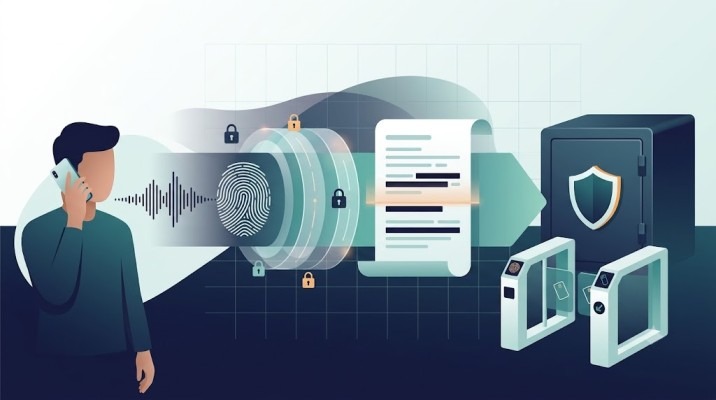
While the DPDP Act mandates reasonable security safeguards, the DPDP Rules explicitly highlight encryption as a best practice. To comply with the DPDP Act, voice agents should use enterprise-grade encryption both in transit and at rest. When autonomous systems analyze sentiment, accents, or verify identity through speech patterns, fiduciaries must implement strict access controls. Automated data redaction protocols must also strip personally identifiable information from call transcripts and audio logs before they enter long-term storage or training pipelines.
Implementing Purpose Limitation and Data Minimization
The era of hoarding conversational data for undefined future analytics is over. The DPDP Act enforces purpose limitation.
If a user consents to share details for an appointment booking, the enterprise cannot legally repurpose that data for a separate upselling campaign without obtaining fresh consent. Ensuring AI calling compliance and data privacy in India requires voice systems to tag and silo the intent behind data collection accurately. Delete data once the specific purpose for which you collected it has been fulfilled, unless the law requires retention.
Architecting for the Right to Erasure and Breach Notification
Consumers possess the legal right to request the deletion of their personal data. Enterprises need automated workflows that can identify and erase specific user records across CRMs, audio storage buckets, and language model contextual memory within legally required timelines. If an autonomous agent writes caller data into an external database, the architecture must support bidirectional deletion triggers to remain compliant.
Additionally, the DPDP Rules mandate strict data breach notification protocols. Enterprises must possess the monitoring capabilities to detect unauthorized access to personal data and the operational readiness to issue a detailed report to the Data Protection Board within 72 hours, as well as notify affected data principals without delay.
The Ello Advantage: Secure and Compliant Operations
Ello provides a 2026-standard agentic voice framework built for the complexities of the Indian enterprise market. The platform uses multi-agent cognitive orchestration and autonomous reasoning to handle complex business workflows while staying strictly aligned with regulatory requirements.
Ello features a Voice-to-Action Engine that executes tasks directly inside enterprise CRMs, ERPs, ATS, and PMS platforms while remaining live on the call. The Self-Evolving Architecture runs an autonomous learning loop that analyzes conversational data and rebuilds its own prompts; however, to maintain strict adherence to purpose limitation, it uses only redacted, consented data for this continuous learning. In customer deployments, this architecture drives a 30 percent boost in operational efficiency after approximately 200 calls without manual developer intervention.
With native support for 100+ languages, the system handles colloquial code-switching and code-mixing seamlessly across India’s regional markets. All operations are backed by SOC 2 Type II attestation, strict hallucination guardrails, and built-in controls covering TRAI mandates, DND scrubbing, and calling-hour restrictions, helping enterprises meet their voice AI compliance obligations. Under the DPDP Act, the enterprise remains accountable as the data fiduciary, and Ello’s controls are designed to support that responsibility.
Frequently Asked Questions
1) What is the primary focus of voice AI compliance in India?
It focuses on compliance with the DPDP Act and TRAI guidelines. Enterprises must secure explicit consent before collecting personal data during automated calls and strictly honor Do Not Disturb registries.
2) How does the DPDP Act affect audio recordings?
Enterprises must clearly inform users that the call is being recorded and state the specific purpose. Storing this audio requires robust security safeguards, such as encryption, and mechanisms to delete the data upon user request.
3) Are there restrictions on when autonomous agents can make outbound calls?
Yes. Systems must follow TRAI regulations regarding permissible calling hours. AI dialers must automatically block outbound promotional calls outside of the 9 AM to 9 PM IST window.
4) How should organizations handle voice biometrics?
Voice biometrics are personal data and require heightened safeguards. Organizations must apply advanced security measures like encryption and ensure the data is used exclusively for the authenticated purpose stated to the consumer.
5) What are the penalties for non-compliance under the DPDP Act?
The Data Protection Board of India can impose severe financial penalties on data fiduciaries, reaching up to ₹250 crore for significant breaches or failures to implement reasonable security safeguards.
6) Is a voice AI vendor a data fiduciary or a data processor?
Usually a data processor. The enterprise that decides why and how it uses call data is the data fiduciary and remains accountable under the DPDP Act. The voice AI vendor processes data on its behalf under a contract. A vendor that uses call data for its own purposes may be treated as a fiduciary for that processing.
7) Do TRAI calling-hour limits apply to service calls?
Not in the same way. The 9 AM–9 PM window applies to promotional calls. Service and transactional calls, such as payment reminders, OTPs, and appointment confirmations, are treated differently, though sector rules can still apply. For example, RBI guidelines restrict debt recovery calls to 8 AM-7 PM.
8) When is the DPDP Act fully enforceable?
From 13 May 2027. The DPDP Rules were notified in November 2025 with an 18-month phased rollout: Data Protection Board provisions took effect immediately, Consent Manager registration opens on 13 November 2026, and core duties such as notice, consent, security safeguards, and breach reporting apply from 13 May 2027.
Elevating Enterprise Governance
Deploying autonomous voice infrastructure requires rigorous attention to data protection standards. Organizations that evaluate voice AI platforms for outbound automation with built-in compliance guardrails will mitigate legal risks while building stronger trust with their customer base. Achieving sustainable voice AI compliance protects both enterprise operations and consumer rights.
See how Ello enables compliant, enterprise-grade voice automation. Explore Ello.